
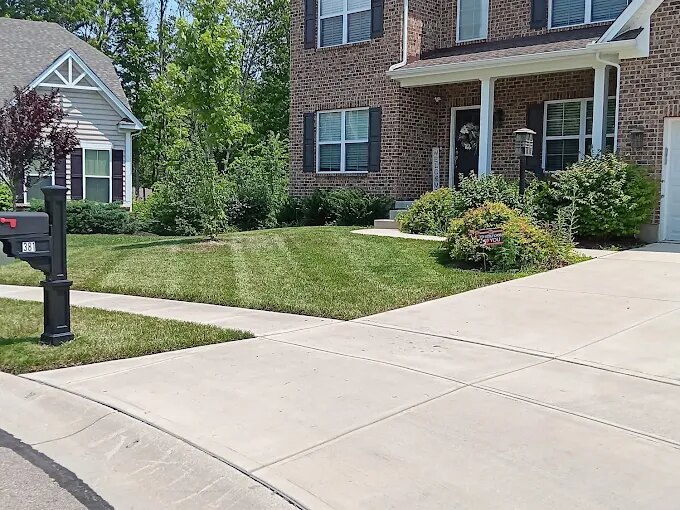
1. Clean up first
Clear leaves, sticks, and winter debris from the lawn and beds so grass can breathe and beds look fresh. A good spring cleanup is the foundation everything else sits on.
2. Stop weeds before they start
A spring pre-emergent application stops crabgrass and other weeds before they germinate. Timing is everything — too late and you have missed the window.
3. Feed and assess the soil
A light spring feeding greens the lawn up. It is also the time to spot thin or compacted areas that may need aeration or overseeding later.
4. Refresh beds and sharpen edges
Fresh mulch, clean hand-cut edges, and tidy shrubs instantly lift curb appeal and protect your plants for the season ahead.
5. Start mowing right
Mow at the proper height for cool-season grass and keep blades sharp. Cutting too short early stresses the lawn and invites weeds.
Start with cleanup and a close look
Before any treatment, clear the winter debris, sticks, matted leaves, and dead growth that smother the crown of the grass. This is also the moment to assess honestly: where are the thin spots, the compacted paths, the low areas that stayed wet all winter. A good spring plan starts from what the lawn is actually telling you, not a generic calendar. Ten minutes of walking the yard with a critical eye will point you to the fixes that make the biggest difference this season.
Pre-emergent timing is everything
The most valuable spring treatment for many lawns is a pre-emergent that stops crabgrass and other summer weeds before they sprout. The catch is timing: apply too late and the window closes, because pre-emergent works by preventing germination, not killing established weeds. In Northern Kentucky that window generally opens in early to mid spring as soil temperatures climb. Miss it and you spend the summer fighting weeds you could have prevented with one well-timed application.
Set the foundation, do not rush the feeding
Spring is tempting for heavy fertilizer, but a lighter touch is usually smarter for cool-season lawns, with the heavier feeding saved for fall. Focus spring energy on the practices that set up the whole year: sharpen the mower blade, mow high, overseed thin areas, and consider aeration if the soil is compacted. A lawn that gets a strong, measured start in spring needs far less rescue work when summer heat arrives.