
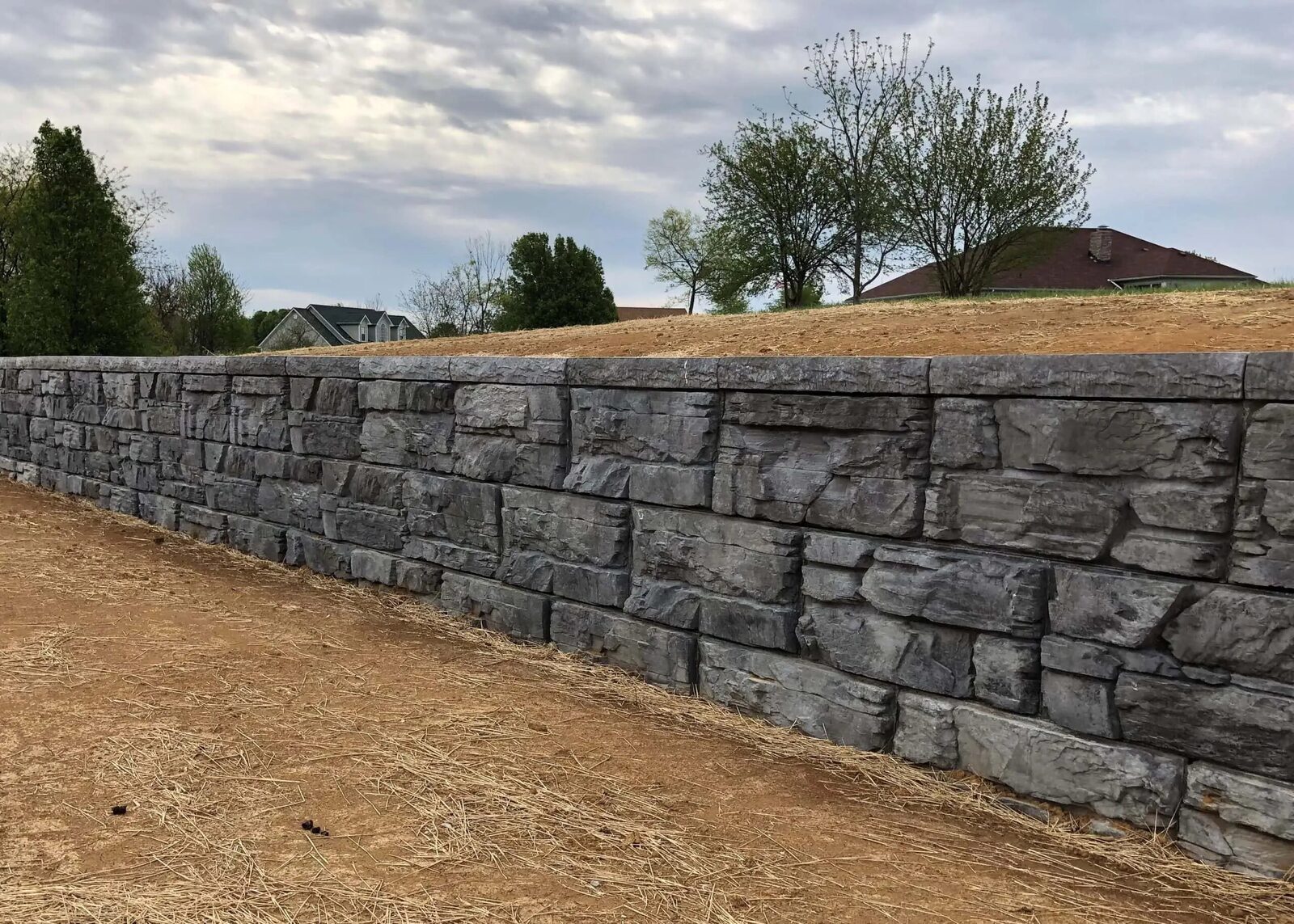
What a retaining wall typically costs
Most residential retaining walls in Northern Kentucky fall between $4,000 and $18,000. A short garden wall sits at the low end, while a tall engineered wall or a natural-stone build with full drainage runs higher. Smaller projects generally start around $2,500 to $3,000.
What drives the price
Four things move the number most: the wall's length and height, the material (engineered block vs. natural stone), the drainage and base work behind it, and site access. Taller walls may also need engineering and permits, which we assess for you up front.
Block vs. natural stone
Engineered block is the best value and comes in many looks. Natural stone costs more because fitting irregular stone is slow, skilled work — but the result is striking. We will show you options that match your home and budget.
Why the base and drainage matter most
Almost every failed wall comes down to one thing: a poor base or no drainage. The parts you cannot see are where quality lives. We never cut those corners — it is the difference between a wall that lasts 5 years and one that lasts 50.
What actually drives the price of a wall
The single biggest cost factor is height, because taller walls carry more load and often trigger engineering and permit requirements. After that comes the material: standard segmental block sits at the affordable end, large-format or textured block costs more, and natural stone is the premium option. Site access matters too. If a machine cannot reach the work area and everything has to be moved by hand, labor climbs quickly. Finally, the invisible work, base excavation, compacted gravel, and drainage behind the wall, is where a durable wall separates itself from a cheap one that leans within a few years.
Block vs. natural stone: which is right for you
Segmental concrete block is engineered, consistent, and cost-effective, and it is the right choice for most functional walls where the priority is holding back soil and creating usable space. Natural stone costs more and takes longer to install, but nothing matches its character, and on a high-visibility front landscape it can be worth every dollar. Many Northern Kentucky properties use a smart hybrid: engineered block for the heavy structural walls out back, and natural stone or veneer where the wall is a focal point people actually see.
Why the cheapest bid usually costs more
A retaining wall is only as good as its base and drainage, and those are exactly the parts a lowball bid tends to skip. A wall built on unprepared soil with no drainage may look fine for a season, then bulge, crack, or tip as water builds up behind it and the ground freezes and thaws. Fixing a failed wall means tearing it out and starting over, so the low bid becomes the most expensive option. When you compare quotes, ask specifically about base depth, gravel, compaction, and the drainage system behind the wall.