
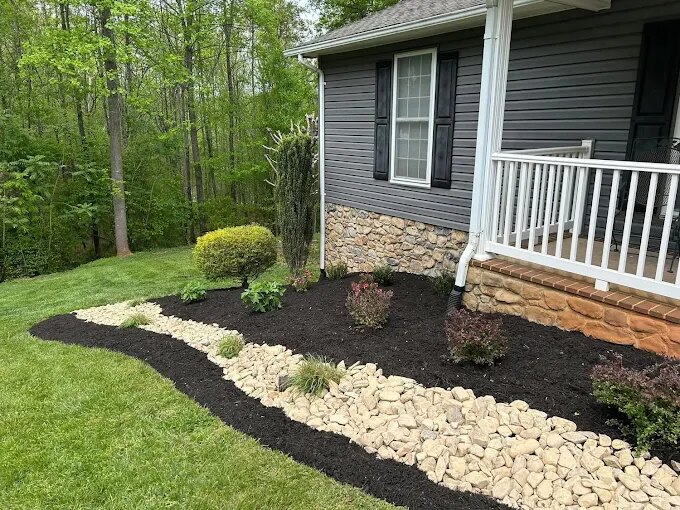
The case for mulch
Mulch looks classic, feeds the soil as it breaks down, retains moisture, and suppresses weeds. The trade-off is that it needs refreshing — usually once a year — to keep its rich color and protection.
The case for rock
Decorative rock is long-lasting and low-maintenance — install it once and it stays for years. It is great for drainage areas and modern looks. The downsides: it does not feed the soil, can hold heat, and is harder to change later.
How to choose
Mulch is usually best around plants and trees you want to thrive. Rock shines in low-maintenance borders, drainage zones, and high-traffic spots. Many properties use both. Whatever you pick, the finish depends on sharp edging and proper bed prep.
Our installs include more than material
Every JW mulch and rock install includes hand-cut bed edging, weeding, shrub trimming, and a full bed clean-up — so the whole property looks intentional, not just topped off.
The long-term cost picture
Mulch is cheaper up front but breaks down and needs topping off every year or two, so its cost is recurring. Rock costs more to install but can last many years without replacement, which makes it cheaper over a long horizon in the right setting. The catch is that rock does not improve the soil and can be a real headache to remove or change later, and it can trap heat around plants that prefer cooler roots. The right answer depends less on price and more on the specific bed and what you are planting in it.
Where each one wins
Mulch is the better choice around most plantings, trees, and shrubs, because it moderates soil temperature, holds moisture, suppresses weeds, and feeds the soil as it decomposes. Rock shines in high-traffic or high-wind areas, around downspouts and drainage paths, along foundations, and in low-maintenance zones where you do not want to re-mulch every year. Many Northern Kentucky landscapes use both strategically: mulch in the planting beds where soil health matters, and rock in the utility areas where durability and drainage matter more.
Do it right, whichever you choose
Both materials fail when they are installed wrong. Piling mulch against tree trunks in a volcano shape invites rot and pests, and laying rock without proper edging and a quality landscape fabric means weeds and soil migration within a season. Bed prep is the difference maker: clean edges, the right depth, and a plan for how water moves through the bed. Done properly, either material looks sharp and performs for its full expected life instead of turning into a maintenance problem.