Maintenance
Natural grass needs mowing, watering, fertilizing, and weed control all season. Quality artificial turf needs almost none of that, just an occasional rinse and brush. If you want a perfect lawn with near-zero upkeep, turf wins.
Cost over time
Turf costs more upfront but eliminates years of mowing, water bills, and treatments. Natural grass is cheaper to start but costs more to maintain. The right choice depends on your timeline and budget.
Where turf shines
Turf is ideal for pet areas, putting greens, shaded spots where grass will not grow, steep or hard-to-mow areas, and anyone who wants their weekends back.
Where natural grass still wins
Some homeowners prefer the feel of real grass, and large open lawns are often more economical in natural turf. We install and maintain both, and as a Go Green Synthetic Turf installer we can show you premium turf options.
The honest trade-offs
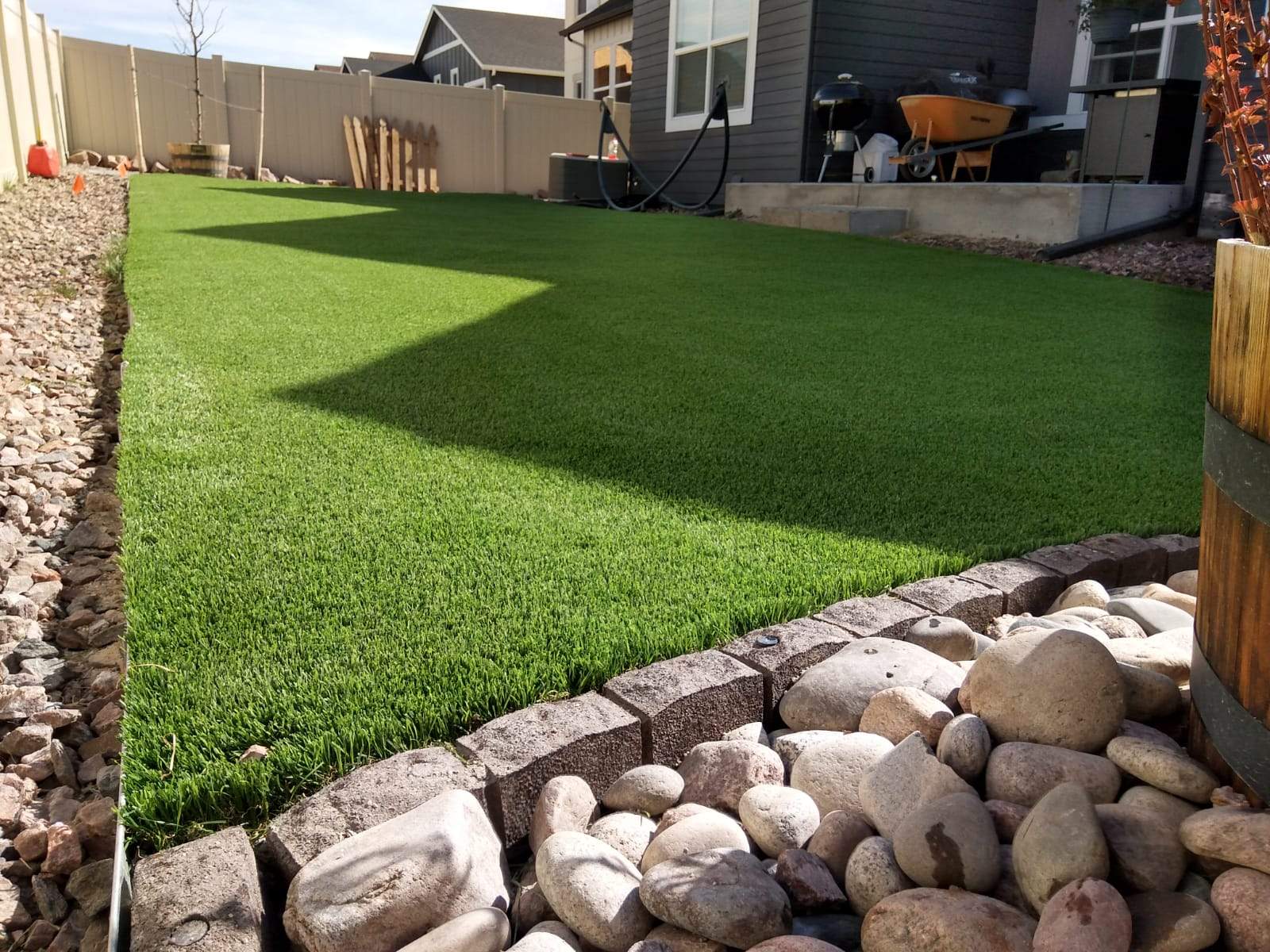
Artificial turf costs significantly more up front but eliminates mowing, watering, and fertilizing, and it stays green and usable in spots where real grass struggles, deep shade, heavy pet traffic, or small courtyards. Natural grass costs less to install, feels and cools like the real thing, and can be repaired or reseeded, but it needs ongoing care to look its best. Neither is universally better. The right choice depends on the specific space, how it gets used, and how much maintenance you want to sign up for.
Where turf makes the most sense
The strongest cases for artificial turf are the spots where natural grass keeps failing: dense shade under mature trees, narrow side yards, rooftop or courtyard spaces, pet areas that get torn up and stained, and putting greens. In those settings turf solves a problem that no amount of seed and fertilizer will fix. It is also popular with owners who travel or simply want to reclaim their weekends from yard work. When installed over a proper base with real drainage, quality turf looks convincing and holds up for many years.
Installation quality decides the outcome
Turf lives or dies on its base. A proper installation means excavating, laying and compacting the right aggregate, grading for drainage, and securing the turf so it does not shift or wrinkle. Cheap installs over poor base drain badly, develop dips, and can hold odor in pet areas. If you go the turf route, the product matters less than the crew installing it, ask about base depth, drainage, and infill just as carefully as you would ask about the turf itself.